Software, process and applied AI consultancy
The problem isn't the technology. It's how it gets bought.
The most common mistake isn’t a bad framework choice. It comes earlier — in how you decide what to build, and in what you call “done”.
Six questions, on your own, and no email required.
-
In A report that took an hour to come out of the ERP
Out The same report in ten seconds, without touching the ERP
The data was there, the answers were not
00000111 · 3 alerts
The three alerts we see again and again
-
It gets bought on hype
The technology everyone is talking about wins over the one the problem actually needs. It impresses in the demo and breaks in production.
How much of what you bought last year is still in use today?


-
It gets delivered half-done
The project is marked closed and the problem is still alive. It works in staging, not in the reality of the business.
How many “finished” projects still haven't solved what they were meant to solve?

-
It gets billed by the hour
The supplier charges for time spent, not for results. Nobody has a real stake in it finishing well and finishing soon.
Who benefits when the project drags on?




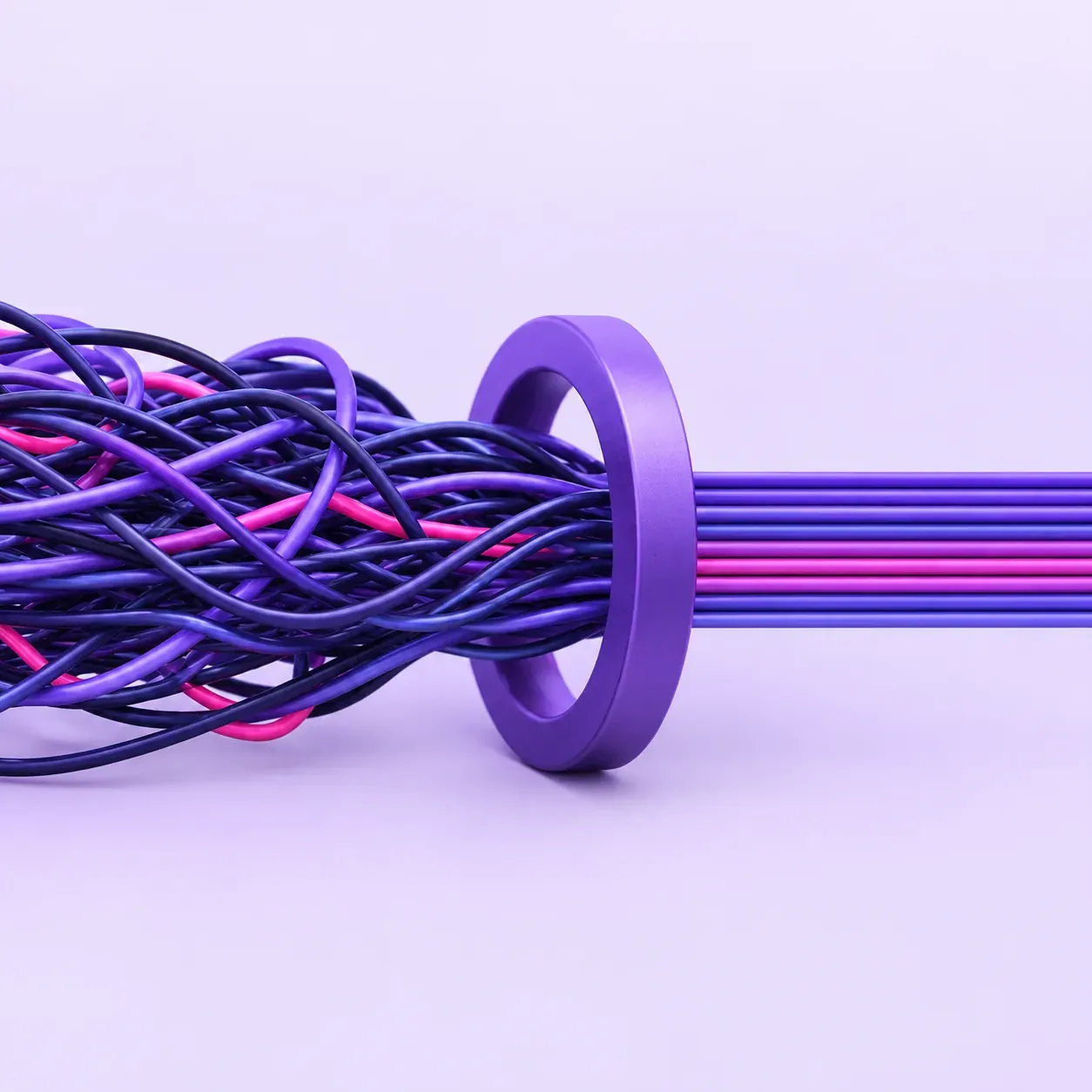
That's why we start with the diagnosis: understand the business before building, and don't let go of the project until it genuinely works.
What we do
Horizontal by design
The client's industry changes; the method doesn't. Most projects combine more than one block.
-
Build
Software
-
Custom software development
For when the tool that already exists doesn't fit how the work actually happens.
-
Tools for your own team
Intranets and internal platforms people actually use.
-
-


Connect
Infrastructure and cloud
-
Infrastructure and networking
The ground everything else runs on.
-
Cloud computing
The cloud your operation needs, not the biggest one.
-
-


Shield
Security
-
Cybersecurity
Protecting what holds up the operation, before the incident.
-
Security training
So your team recognises an attack before opening the door to it.
-
-
Transform
Process and AI
-
Digital transformation and process improvement
The process first, the tool second.
-
Applied AI
Where it moves the needle, not where it sounds good in the pitch.
-
-


Position
Product and brand
-
Product and experience design
Technology that shows up in the business, not in the demo.
-
Brand identity
A name, a visual system and usage rules that hold up as the business grows.
-
Brand loyalty
So your client's clients come back.
-
-


Support
Continuity
-
Maintenance and support
After the project ships, with agreed response times.
-
Continuous evolution
The solution keeps pace with the business as it grows.
-


How we work
Five stages, five concrete outputs
The client knows which stage they are in and what they get when it ends.
Business problem in Working solution out
-
01
Discovery
A real diagnosis of the business, not a requirements checklist. We understand the problem before proposing anything.
Output A diagnosis and a map of the problem
-
02
Solution design
The diagnosis becomes a technical and commercial proposal, with a defined scope and reasoned decisions.
Output Technical proposal and closed scope
-
03
Development
Iterative construction, with visibility for the client throughout. No black boxes.
Output Working partial deliveries
-
04
Rollout
Into production, and verified in the client's own reality — not only in staging.
Output The solution running in production
-
05
Support and evolution
Maintenance, post-project support and continuous improvement as the business changes.
Output A support and improvement plan

